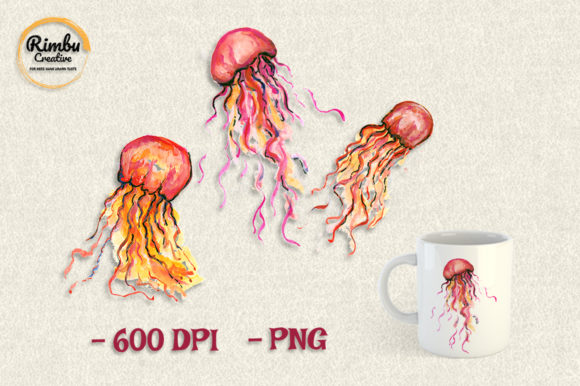
Jellyfish Watercolor Clipart & Illustrations
As a brand designer who has spent years curating visual identities for local businesses, I approach every new graphic design asset with a critical eye. Recently, while brainstorming concepts for a small-batch artisanal soap line called "Tidal Glow," I stumbled upon the Jellyfish Watercolor Clipart Sea Animal. My immediate reaction was one of relief; in a sea of generic, vector-heavy stock photos, this piece offered a distinct, organic texture that felt instantly premium yet approachable. The soft gradients and fluid lines suggest a brand personality that is gentle, natural, and deeply connected to the ocean, making it an ideal candidate for skincare, wellness, or boutique food products.
The mood created by this specific illustration is undeniably calming. It does not scream for attention like a bold geometric logo might; instead, it whispers elegance. For a handmade business owner trying to convey that their product is crafted with care and natural ingredients, this watercolor style bridges the gap between professional branding and artisanal charm. It feels less like a digital clip and more like a hand-painted label element, which is exactly what modern consumers are craving in the current market.
Elevating Product Labels and Packaging Design
When I began integrating the Jellyfish Watercolor Clipart Sea Animal into my packaging design mockups, its versatility became immediately apparent. For the "Tidal Glow" project, I placed the jellyfish as a subtle background element on the front label, using a low opacity to ensure the product name remained legible. This technique creates a layered effect that adds depth without cluttering the visual hierarchy. The result was a product label that looked expensive and thoughtfully designed, instantly boosting the perceived value of the soap bars.
Beyond just labels, this asset shines in various commercial design applications. Imagine using it as a central hero graphic on a thank-you card included inside a shipping box. That small touch transforms a standard transaction into a memorable unboxing experience, fostering a stronger emotional connection with the customer. Similarly, when applied to hang tags or printable inserts, the watercolor texture adds a tactile quality that digital-only brands often lack. For social media graphics, cropping the image to focus on the tentacles or the bell shape can create stunning, cohesive Instagram posts that align perfectly with a coastal or spa-themed aesthetic.
Strategic Applications for Local Brand Owners
Local business owners and creative entrepreneurs often struggle to find assets that work across multiple mediums. The beauty of these Illustrations lies in their adaptability. Here are a few specific ways I utilized this asset to strengthen brand identity:
- Promotional Banners: Used as a decorative border on website headers to signal seasonal summer campaigns without overwhelming the navigation.
- Menu Graphics: Integrated subtly into the corners of a beachside cafe menu to reinforce the location's vibe.
- Stickers and Swag: Scaled down for die-cut stickers used in loyalty programs, where the soft edges of the watercolor style prevented the design from looking too rigid.
- Business Cards: Placed on the back of cards as a watermark to add a layer of sophistication to networking materials.
Each application demonstrated how a single high-quality Jellyfish Watercolor Clipart Sea Animal could serve as the anchor for a consistent visual language. Consistency is key in building customer trust; when your packaging, social media, and physical collateral all share the same visual DNA, your brand becomes recognizable and reliable.
Navigating Design Constraints and Best Practices
While the potential is vast, experienced designers know that no asset is a magic bullet. There are scenarios where the Jellyfish Watercolor Clipart Sea Animal should be used with caution. For instance, if you are designing for a formal corporate entity or a luxury minimalist brand that relies on stark black-and-white contrast, this playful, textured illustration might feel out of place. It competes poorly against heavy legal text or ingredient lists, so it should never be placed directly behind critical information where readability is paramount.
I also advise testing this asset on very small labels. While the watercolor style is beautiful, intricate details can sometimes get lost when scaled down for tiny perfume vials or spice jars. In such cases, simplifying the composition or using the silhouette version (if available) is a smarter move. Additionally, avoid placing it on low-contrast backgrounds where the soft colors might disappear. Always preview your design in black and white to ensure the visual weight holds up even in monochrome print runs.
Practical Designer Notes for Implementation
Before committing any design assets to a client project or your own product line, there are several technical checks you must perform. First, always verify the commercial license. You need absolute certainty that you have the rights to use the Jellyfish Watercolor Clipart Sea Animal for physical product sales and marketing visuals. Second, inspect the file format. If you are working with a PNG design, check the transparency to ensure there are no jagged white borders around the edges. If an SVG design option is available, take advantage of it for scalable logo design needs.
Typography pairing is another crucial step. I found that this illustration pairs exceptionally well with serif fonts for a classic look or handwritten scripts for a friendly, personal touch. However, it can clash with overly aggressive display fonts. Test the asset beside different typefaces to see what enhances the overall message. Finally, compare your final mockup against competitor packaging. Does your label stand out? Does it communicate the unique selling proposition of your handmade business? If the answer is yes, then you have successfully leveraged a simple illustration into a powerful branding tool.
In conclusion, the Jellyfish Watercolor Clipart Sea Animal is more than just a cute picture; it is a strategic component for small business branding. When used correctly, it elevates product presentation, improves shelf appeal, and helps local businesses tell their story visually. Whether you are a marketer creating a Canva template or a designer crafting a custom logo, understanding how to deploy these Illustrations effectively can make the difference between a good brand and a great one.